
| Prof. Haibin ZhuNipissing University, Canada IEEE Fellow Haibin Zhu is a Full Professor at Nipissing University, Canada. He is also an affiliate full professor of Concordia Univ. and an adjunct professor of Laurentian Univ., Canada. He has accomplished over 330+ research publications, including 70+ IEEE Transactions articles. He is a Fellow of IEEE, AAIA, and I2CICC, a senior member of ACM. He is Vice President - Systems Science and Engineering (SSE) (2023-), a co-chair (2006-) of the technical committee of Distributed Intelligent Systems, and a Distinguished Lecturer of IEEE Systems, Man and Cybernetics (SMC) Society (SMCS), Associate Editor (AE) of IEEE Trans. on SMC: Systems (2018-), IEEE Trans. on Computational Social Systems (2018-), and IEEE Systems Journal (2024-). He is the creator of the E-CARGO model and the founding researcher of Role-Based Collaboration. He has delivered one IEEE SMCS Distinguished Lecture (2025), 40+ keynote and plenary talks, and 90+ invited talks worldwide. His research has been supported by over $1M CAD from agencies including SSHRC, NSERC, IBM, DNDC, DRDC, and OPIC. His honors include being named among the “Most Influential Robotics Trailblazers, Making Waves in the Industry – 2024” by InsightsSuccess Magazine, Best Paper Award at CSCWD 2025 (France) and Best Paper Award for International Collaboration at CSCWD 2022 (China), the IEEE SMCS Meritorious Service Award (2018), the Chancellor’s Award for Excellence in Research (2011), two Nipissing University Research Achievement Awards (2006, 2012), the IBM Eclipse Innovation Grant Awards (2004, 2005), the Best Paper Award (ISPE/CE2004), the OOPSLA Educator’s Fellowship (2003), a Second-Class National Award for Education Achievement (1997), and three First-Class Ministerial Research Achievement Awards from China (1991, 1994, 1997). Speech Title: Team Intelligence: An E-CARGO Perspective Abstract: Humans live in societies and cannot exist in isolation. As a result, social intelligence (SoI) is essential for every individual, even though it is largely ignored by current Artificial Intelligence (AI) systems. While Artificial General Intelligence (AGI) has been proposed to endow machines with the full spectrum of human intelligence, many forms of intelligence beyond individual cognition, such as SoI, emotional intelligence and systems intelligence, remain insufficiently modeled. Team Intelligence (TI) has also been discussed and explored in the literature; however, because most existing studies on TI primarily from a humanistic or qualitative perspective, it has been difficult to define it as a rigorous and widely accepted scientific concept. With the introduction of the Environments–Classes, Agents, Roles, Groups, and Objects (E-CARGO) model and the Role-Based Collaboration (RBC) methodology, it becomes possible to formally specify a unified and computationally grounded concept of team intelligence. In this talk, a real-world scenario is presented to motivate the need for explicitly defining and evaluating team intelligence, and to demonstrate how TI can be naturally supported within the E-CARGO/RBC framework. Building on this foundation, the speaker proposes a quantitative indicator for team intelligence, analogous to IQ (Intelligence Quotient), termed TIQ (Team Intelligence Quotient). By reviewing and synthesizing related work, the talk further clarifies the concepts of social intelligence, systems intelligence, and team intelligence, and consolidates them within the perspective of the proposed approach. |
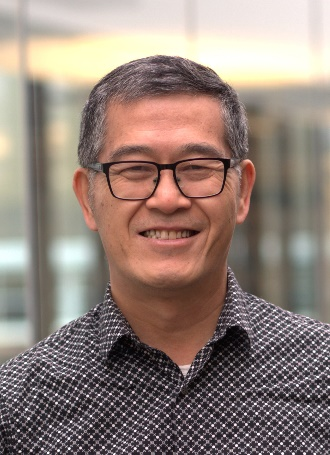
| Prof. James Tin Yau KWOKThe Hong Kong University of Science and Technology, Hong Kong, China IEEE Fellow Prof Kwok received his B.Sc. degree in Electrical and Electronic Engineering from the University of Hong Kong and his Ph.D. degree in computer science from the Hong Kong University of Science and Technology. He then joined the Department of Computer Science, Hong Kong Baptist University as an Assistant Professor. He returned to the Hong Kong University of Science and Technology and is now a Professor in the Department of Computer Science and Engineering. He is serving / served as an Associate Editor for the IEEE Transactions on Neural Networks and Learning Systems, Neural Networks, Neurocomputing, Artificial Intelligence Journal, International Journal of Data Science and Analytics, and on the Editorial Board of Machine Learning. He is also serving as Senior Area Chairs of major machine learning / AI conferences including NeurIPS, ICML, ICLR, IJCAI, and as Area Chairs of conferences including AAAI and ECML. He is on the IJCAI Board of Trustees. Speech Title: Unlock Your Potential: Achieving Multiple Goals with Ease Abstract:Multi-objective optimization (MOO) aims to optimize multiple conflicting objectives simultaneously and is becoming increasingly important in deep learning. However, traditional MOO methods face significant challenges due to the non-convexity and high dimensionality of modern deep neural networks, making effective MOO in deep learning a complex endeavor. In this talk, we address these challenges in MOO for several deep learning applications. First, in multi-task learning, we propose an efficient approach that learns the Pareto manifold by integrating a main network with several low-rank matrices. This method significantly reduces the number of parameters and helps extract shared features. We also introduce preference-aware model merging, which uses MOO to combine multiple models into a single one, treating the performance of the merged model on each base model's task as an objective. During the merging process, our parameter-efficient structure generates a Pareto set of merged models, each representing a Pareto-optimal solution tailored to specific preferences. Finally, we demonstrate that pruning large language models (LLMs) can be framed as a MOO problem, allowing for the efficient generation of a Pareto set of pruned models that illustrate various capability trade-offs. |

| Prof. Rustam ShadievZhejiang University, China Prof. Rustam Shadiev earned his Ph.D. in Network Learning Technology from National Central University in 2012. He is currently a Tenured Professor at the College of Education, Zhejiang University, Hangzhou, China, specializing in advanced learning technologies for language learning and cross-cultural education. Prof. Shadiev is a Fellow of the British Computer Society and a Senior Member of the Institute of Electrical and Electronics Engineers (IEEE). In 2019, he was honored with the title of Distinguished Professor of Jiangsu Province, China. Further, he has been recognized as one of the most cited Chinese researchers in the field of education by Elsevier, Scopus, and Shanghai Rating for four consecutive years, from 2020 to 2023. Research field: Advanced learning technology, Speech to text recognition technology, computer aided translation, multimedia learning systems, multi-touch technology, intercultural education and language learning, mobile assisted learning, open and distance learning, etc. Speech Title: Generative Artificial Intelligence in Education: Insights from Cross-Cultural Learning Projects Abstract: This speech explores the applications of generative artificial intelligence (GAI) in cross-cultural education, with particular attention to how GAI supports the development of cross-cultural knowledge, competence, and awareness. Building on prior work, the presentation examines how text-, image-, and video-based generative AI tools can be systematically integrated into learning designs to facilitate meaningful cross-cultural engagement and understanding. Grounded in learning theories including cultural convergence theory, constructivism, sociocultural learning, and contextual learning perspectives, the speech proposes a structured pedagogical framework that aligns GAI affordances with established theoretical foundations. A five-step instructional model is introduced to illustrate how immersion and interaction can be fostered through GAI-supported activities, enabling learners to co-construct knowledge, negotiate meaning, and reflect on culturally situated practices. Drawing on multiple international projects, the presentation highlights practical implementations of GAI in cross-cultural learning contexts, including text-based generative tasks, GAI-supported virtual reality experiences, and multimodal applications that integrate text, images, and video. These projects demonstrate how learners engage with generative AI to produce, share, and critically examine culturally informed content while interacting with peers from diverse cultural backgrounds. The results indicate that thoughtfully designed GAI-supported activities can enhance learners’ cross-cultural understanding, promote active participation, and support the development of intercultural competence through sustained interaction and reflection. The speech concludes with practical recommendations for educators and researchers on designing and implementing generative AI–enabled learning environments that meaningfully support cross-cultural learning while remaining pedagogically grounded and culturally responsive. |

| Assoc. Prof. Ata Jahangir MoshayedJiangxi University of Science and Technology, ChinaIEEE Senior Member Dr. Ata Jahangir Moshayedi is an Associate Professor at Jiangxi University of Science and Technology. He holds a Ph.D. in Electronic Science from Savitribai Phule Pune University (formerly the University of Pune), India. He is a Senior Member of IEEE, a Professional Member of ACM, and a Life Member of the Instrument Society of India.Dr. Moshayedi has published over 100 research papers, authored 4 books, contributed to 4 book chapters, and holds 2 patents and 16 copyrights. He actively serves as a technical program committee member and session chair for numerous international conferences. His current research focuses on robotics, particularly the development of autonomous guided vehicles (AGVs) for applications such as smart farming, food delivery and elderly care. Speech Title: Pharyngeal Phonetics as Breaking Free from Spirometry Abstract: Traditional spirometry, while essential for diagnosing respiratory diseases, is constrained by its invasiveness and dependence on patient exertion, rendering it unsuitable for many high-risk individuals. This work presents a paradigm-shifting alternative: a non-contact lung function assessment that leverages pharyngeal phonetics and machine learning. By analyzing respiratory acoustics without forceful exhalation, our method eliminates key risks and discomforts. It unlocks new possibilities for telemedicine and decentralized monitoring, allows for high-frequency testing, and employs advanced analytics to detect incipient lung impairment. Ultimately, this technology promises to democratize respiratory care by offering a safer, more scalable, and readily deployable solution through standard consumer devices. |
